
Clarifying the Meaning of the Patriarch’s Statement
At first sight, the language used by Patriarch Constantius seems to have only one possible meaning. It appears to say clearly that the ancient...

Note on the Location of the Ancient Harbour Wall Discovered in 1819
The discovery of an ancient harbour wall in the year 1819 is an important event in the study of Constantinople’s maritime history. Our knowledge...

Street and Pier of the Drungarii
Running along the outside of the city wall, east of the Gate of the Drungarii, was a busy street known in Byzantine times as...
Markets Near the Gate
Evidence suggests that in Byzantine times, there was a spice market near the Gate of the Perama, similar to the one that still exists...
Zindan Kapoussi and Porta Hebraica
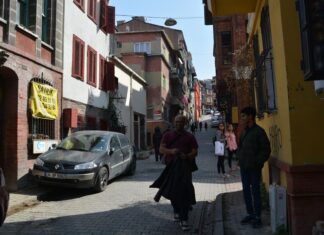
The historian Heyd identified Zindan Kapoussi with the Porta Hebraica, a gate mentioned in the charters granted to the Venetians during the thirteenth century....
The Gate Near the Palace of Blachernae
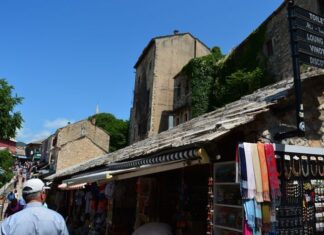
To the north of the second tower in the wall is a gate that matches the Gate of Gyrolimne (Greek: Τάλαί τῆς Γυρολίμνης). This...
The Emperor’s Observation Point
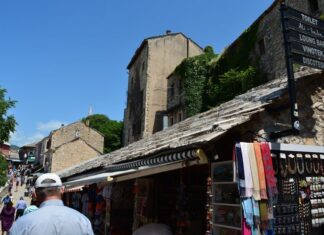
During the siege of Constantinople in 1453, Emperor Constantine XI and the historian George Phrantzes observed the movements of the Turkish army from a...
The Public Gate
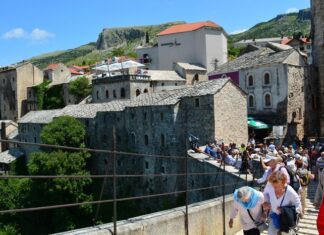
Egri Kapou and the Porta Kaligaria
Between the sixth and seventh towers of the Wall of Emperor Manuel Comnenus, there is a gate now called...
Scutari the City Across the Bosphorus
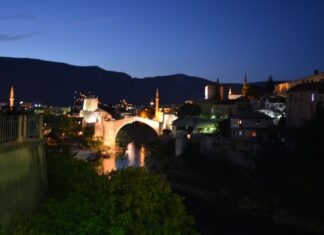
On the opposite side of the Bosphorus from Stamboul lies Scutari, which stands in relation to it much like Jersey City does to New...
The Bosphorus and Its Strategic Role
At the eastern end of the Sea of Marmara lies the Bosphorus Strait. Like the Hellespont (also known as the Dardanelles), the Bosphorus connects...